
A Journey through Time with Anna Holnbrook – Charmouth Heritage Centre
Dorset’s Jurassic Coast is one of the most geologically important landscapes on the planet, making it a popular destination for fossil hunters young and old.. We spoke to Anna Woolcott, Manager for Education at the Charmouth Heritage Coast Centre, about what makes the area so unique and how to hunt for fossils responsibly.
Why is the Jurassic Coast such an important site for palaeontology?
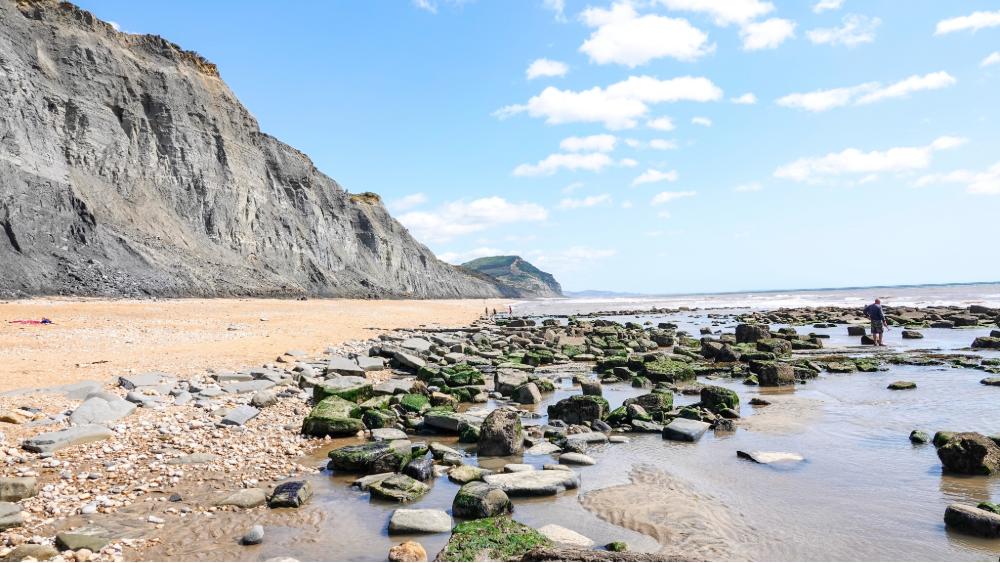
The Jurassic Coast is geologically unique – there is nowhere else on earth where you can walk through 195 million years of Earth’s history, from 3 geological time periods: the Triassic, the Jurassic and the Cretaceous. You can find fossils all the way along the coast, but some areas, such as Charmouth, are more famous than others. Almost 200 million years ago, Charmouth was underwater and near the equator, so much like shallow tropical seas today, it would have been teeming with life. The vast numbers of marine life living here provided many opportunities for creatures to be fossilised. The fossilisation conditions were perfect too, with creatures sinking gently into soft mud and being buried quickly, allowing for many exceptionally preserved fossils.
What’s the most exciting or unusual fossil you’ve found?
I have found a few larger blocks with ammonites in, and some loose ichthyosaur bones, but my favourite fossils are the tiny things. Discovering a unicorn-horn shaped seasnail fossil, no bigger than a few millimetres, is the Jurassic equivalent of a needle in a haystack! What’s fantastic about Charmouth is that fossil hunting is for everyone – you don’t need to be an expert, or crack rocks open with hammers, as 90% of the fossils are just loose amongst the gravel and shingle on the beach. A keen eye, and lots of patience, is key. Our centre is always open for fossil hunting tips and ID too.
What’s on at the Charmouth Heritage Coast Centre that visitors shouldn’t miss?
We’re lucky enough to have some of the best fossil finds from Charmouth and surrounding beaches on display in our free-to-enter Centre. We have the best preserved dinosaur in Britain, Scelidosaur, in addition to newly found ichthyosaurs that could well be new species. If you’re keen to find your own fossils, we also run regular guided fossil hunting walks as well as seashore safaris.
Why is it important for everyone to follow The Fossil Hunting Code?
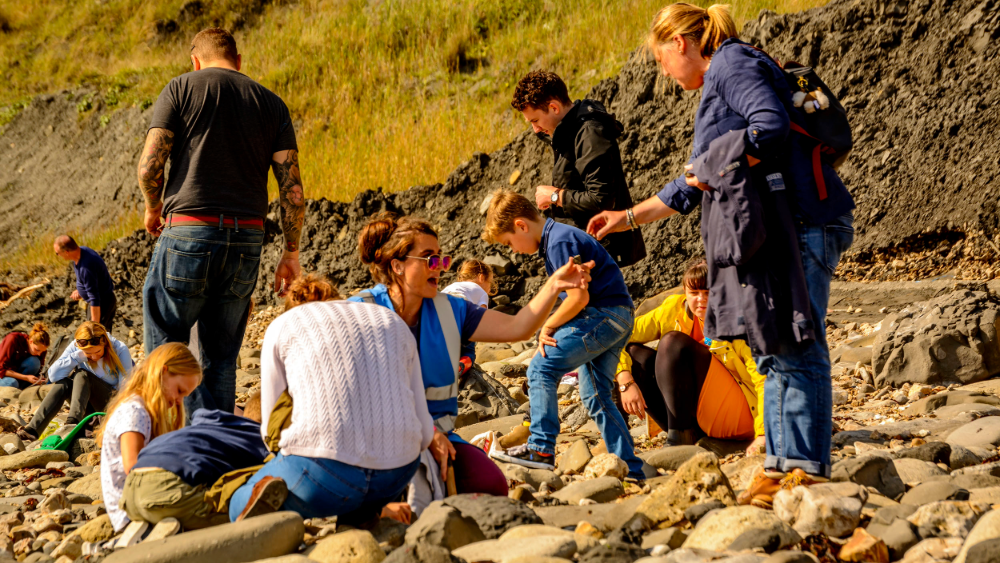
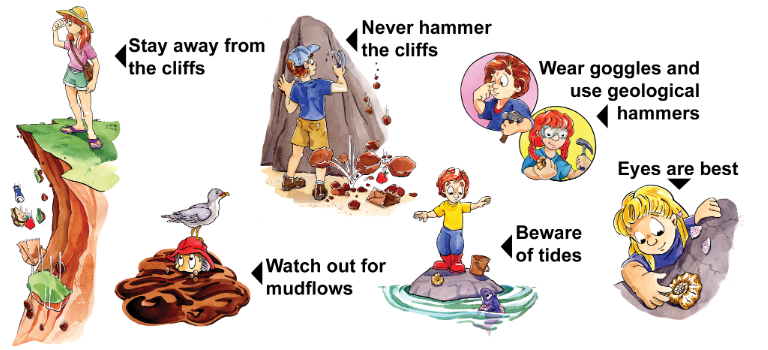
The Code aims to protect both the fossils still hiding in the cliffs, and those that have washed out onto the beach, as well as the people out there hunting. By banning digging in the cliffs, people aren’t actively eroding the World Heritage Site, and also aren’t endangering themselves by hunting directly underneath unstable cliffs. Likewise, once fossils are rolling around on the beach, they quickly get broken by the sea, so the Code encourages fossil hunters to ‘rescue’ these loose fossils. This is the best and safest place to hunt, amongst the loose gravel at the water’s edge. Any fossils you find here are yours to keep!
In your time off, where do you like to visit along the Jurassic Coast?
My favourite spot on the coast has always been Old Harry Rocks near Studland Bay. I grew up near here, and there are incredible views, sometimes as far as the Isle of Wight, plus it’s geomorphologically interesting too. These chalk stacks were once connected to The Needles on the Isle of Wight as a long chalk ridge, before the meltwater after the Ice Age eroded it all away, leaving just the dramatic stacks at either end. It’s hard not to be in awe of nature when you stand there and imagine all that happening so many years ago.
Find out more about Charmouth and its perfect holiday cottages Charmouth for your fossil-hunting adventures in Dorset.